Official product information
SodaSlim Testing, Quality and Seals
Twelve marks read one at a time against what the bottle prints, two of them misspelled — and the nine supplied images this site did not publish.
Written and reviewed by the SodaSlim Editorial Desk · Last updated September 24, 2026
Quick answer
Three of the twelve marks are printed on the bottle; nine exist only in the marketing pack, and none names a certifying body, a date or a scope. ODS: “These seals do not guarantee that a product is safe or effective.” Two are misspelled. Nine supplied images are not published here, and this page says why.
Before the twelve
What a seal is, and what ODS says it is not
Three of these marks are on the bottle. Nine are in the marketing pack. None of the twelve names the body that awarded it.
Twelve marks arrived with this product’s marketing material. Three are printed on the bottle itself — NON-GMO, MADE IN USA with globally sourced ingredients, and GMP CERTIFIED. The other nine exist in the pack rather than on the wrap, which is a distinction no roundel ever makes about itself.
The second thing is what a seal is for. ODS puts it in one sentence, and this whole page is built around it: “These seals do not guarantee that a product is safe or effective.” A seal can tell you a factory keeps records, that a filing was made, or that an ingredient was sourced a particular way. None of those is a statement that the capsule works or that it is safe for you — and not one of these twelve names a certifying body, an audit date or a scope.
Mark by mark
Twelve marks, one at a time
Every one of the twelve, read against what the bottle actually prints.
Each mark is shown at the size the pack supplies it, beside a plain account of what it does and does not establish, in the pack’s own order.
GMP Certified
A process mark, and one of three printed on the bottle itself. It describes how a factory keeps records and documents a batch. It is not an approval of this formula, and no certifying body, audit date or scope is named in anything we were given.
FDA-registered facility
Facilities that make supplements must register with FDA. A registration is a filing, not an inspection result and not an approval. ODS puts the general position plainly: FDA “does not determine whether dietary supplements are effective before they are marketed”.
FDA facility certification
A second mark saying the same thing as the one above it. There is no such thing as an FDA certification of a dietary supplement facility — there is registration, which is a form. Two marks for one filing is a design decision, not a second credential.
100% natural ingredients
Read this against the panel. The largest row is caffeine anhydrous, which is caffeine dried into a powder in a factory, and raspberry ketone at this price is synthesised rather than extracted. “Natural” has no fixed legal meaning on a US supplement label, which is how a roundel like this ends up above a row like that.
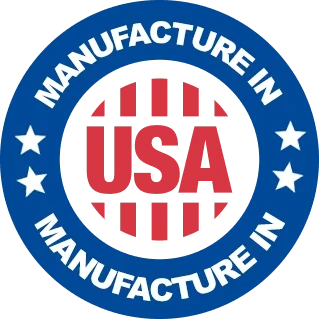
Manufacture in USA
The bottle itself prints the honest, longer version: manufactured in the USA with globally sourced ingredients. The roundel drops the second half — and misspells the first, reading “manufacture” rather than “manufactured”.
Non-GMO
A sourcing statement about the raw materials rather than a test result for the batch. It is also printed on the bottle. No certifying body is named.
Vegetarian
Supported by the label. The other-ingredients line is a single item — hypromellose, a vegetable capsule — and nothing on the panel is animal-derived. On a capsule product the shell is where a vegetarian claim is usually lost. Here it holds.
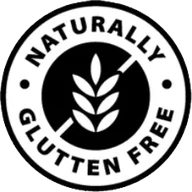
“Naturally glutten free”
The spelling is the pack’s, not ours: two Ts. Beyond the typo, the label makes no gluten claim at all and publishes no test. There is admittedly very little in this capsule that could carry gluten.
Dairy free
Consistent with a label whose only other ingredient is hypromellose. It is still a mark with no statement behind it, because the bottle prints no allergen line.
Doctor formulated
No clinician is named anywhere in the supplied material. The pack also included a stock photograph of an unnamed older man in a white coat pointing at the bottle. We have not published it, because printing it beside this mark would manufacture an endorsement that does not exist.
“Pure” guaranteed
“Pure” has no definition on a supplement label and nothing is being guaranteed by anybody named. No certificate of analysis was supplied, which is the document a purity claim would rest on.

Money-back guarantee
Sixty days from purchase per the supplied pack, unless the sales page prints a longer window. A seller’s promise rather than a regulator’s rule. Read it on the sales page before you pay and screenshot it with the date showing.
Two of the twelve are misspelled
Two of the marks in the supplied pack carry errors a proofreader would have caught. One reads “NATURALLY GLUTTEN FREE” — two Ts. Another reads “MANUFACTURE IN USA” rather than manufactured. Neither is a safety problem and neither tells you anything about the capsule. They tell you that these marks were assembled rather than awarded, which is the useful thing to know about a supplement seal.
The one mark that argues with the panel
The supplied pack ships a 100% NATURAL INGREDIENTS roundel. The largest single row on this panel is caffeine anhydrous — caffeine dried to a powder, manufactured rather than brewed — and raspberry ketone sold at this price is, in practice, synthesised rather than extracted from raspberries. “Natural” has no fixed legal meaning on a US supplement label. NCCIH puts the general point plainly: “‘Natural’ does not necessarily mean ‘safe.’”
The mark most readers assume means the most gets a last line. Good Manufacturing Practice is a process standard about records and traceability, and a factory audited against it can accurately fill a capsule with an ingredient ODS describes with the word unknown. Process marks describe the factory, not the formula.
The section that matters most
The nine supplied images this site did not publish
Described in words, because that is the only honest way to report a photograph you will not show.
This is the most important section on this site, and it concerns images you cannot see here. The supplied pack contained nine image files, in six kinds, that this site has not published — each because publishing it would tell a reader something that is not true.
The supplied asset pack contains a set of customer photographs, and the pack named them itself. Three portraits arrived with the filenames same-person-different-clothes-1, same-person-different-clothes-2 and same-person-different-clothes. Two further images, styled as a strip of polaroids captioned as real buyers, show the same three people again — different clothes, a different room, each holding the bottle up to the camera as though they had photographed themselves at home. A fourth headshot is filed under a person’s full name on a plain white background. None of these images appears anywhere on this site. Publishing them would manufacture customers who do not exist, and the filenames make it impossible to pretend otherwise.
Three “customer” portraits whose own filenames state that they show the same person in different clothes. Publishing them would present one model as three buyers.
Strips styled as at-home snapshots of buyers holding the bottle. They show the same three people again, in different clothes and a different room.
A studio headshot on plain white, filed under a person’s full name. Nothing establishes that any such customer exists.
Customer photographs are the cheapest thing on a sales page to fake and the most persuasive thing on it to a reader. If the same face appears twice in two different outfits, if everyone is holding the bottle at the same angle, or if the lighting on a “selfie” is studio lighting, you are looking at a photoshoot. It says nothing about whether the capsule works — but it tells you exactly how much weight to put on everything else the page says about buyers.
The journal logo bar
One supplied image is a row of five wordmarks: the New England Journal of Medicine, Nature, the International Journal of Obesity, The Boston Globe and the American Physiological Society. There is no caption on it and no citation with it. No study of SodaSlim appears in any of those publications, and none of them has said anything about this product. A logo row reads as an endorsement whatever the small print says, and there is nothing behind this one, so it is not published here.
Five journal and newspaper wordmarks with no caption and no citation beneath any of them.
A media or journal logo bar with no article behind it is one of the most common devices in this category. The test is simple and it takes thirty seconds: if a page shows you a journal’s logo, look for the citation — authors, title, year, a link to the paper. If there is no citation, the logo is decoration.
The stock doctor, and the two fitness models
Two images complete the set. The first is a stock photograph of an unnamed older man in a white coat, pointing at the bottle, supplied to sit near the “doctor formulated” roundel. No clinician is named anywhere in the material we were given, so publishing it beside that mark would manufacture an endorsement that does not exist.
An unnamed man in a white coat, from a stock library, positioned beside a “doctor formulated” claim that names no doctor.
The second is a photograph of two professional fitness models. It carries no claim and no text at all, which is exactly why it could not be published: on a page about a weight-management supplement it functions as an implied result, and the label does not claim a result and correctly cannot.
A stock photograph of two professional fitness models. Here it would work as an implied outcome, which no supplement may claim and this label does not.
The standard
What would actually count as proof
Set against all of that, what would actually count as evidence of quality on a supplement bottle? The answer is short and none of it is a roundel: a certificate of analysis tied to a named lot, a certifying body with a stated scope and date, and a manufacturer with a street address. No certificate was supplied here, no mark names a body, and The label names a distributor, a phone number and an email address, which is more than many labels in this series carry. Note what the address is: a PO box, not a street. A PO box is a mail drop. It tells you where a letter goes and nothing about where the capsules were made, and no manufacturer is named anywhere on this packaging.
The batch-check page covers the two references the pack does supply. In fairness, the one item on that list this product does supply is the panel: Five ingredients, five amounts, no proprietary blend — and three of the five carry a printed standardisation, which is better practice than most labels in this series manage. You can work out that this capsule contains about 65 mg of chlorogenic acids, about 65 mg of HCA and about 58.5 mg of EGCG, because the label gives you the arithmetic to do it.
Questions
SodaSlim FAQ: testing and quality questions
What do the seals mean?
Individually, less than they look like. GMP describes a factory’s record-keeping. There are two separate marks for what is really one FDA registration, which is a filing rather than an approval. “100% natural” sits above caffeine anhydrous. Two of the marks contain spelling or grammar errors. The vegetarian one, though, is genuinely supported by the label. ODS on seals generally: “These seals do not guarantee that a product is safe or effective.”
Is there a doctor behind it?
No clinician is named anywhere in the supplied material. The pack includes a “doctor formulated” mark and a stock photograph of an unnamed older man in a white coat pointing at the bottle. We have not published the photograph.
Why don’t you publish the journal logos?
Because there is no article behind them. A row of five wordmarks with no citation reads as an endorsement, and none of those publications has said anything about this product.
References
Sources for this page
- Office of Dietary Supplements, National Institutes of Health. Dietary Supplements: What You Need to Know. ods.od.nih.gov. Accessed September 24, 2026.
- National Center for Complementary and Integrative Health, NIH. 5 Tips: What Consumers Need To Know About Dietary Supplements. www.nccih.nih.gov. Accessed September 24, 2026.
- U.S. Food and Drug Administration. Dietary Supplements. www.fda.gov. Accessed September 24, 2026.
- National Center for Complementary and Integrative Health, NIH. Using Dietary Supplements Wisely. www.nccih.nih.gov. Accessed September 24, 2026.
Next
Keep reading
Check your batch: lot, certificate and who to call
What the supplied references are, and what they cannot prove.
Read it →The Supplement Facts panel in full
Five rows, five amounts, three standardisations, no blend.
Read it →Why no reviews are published here
The pack calls its own review block layout copy. We agree with it.
Read it →Read the label before you order SodaSlim
Thirty hypromellose capsules a bottle, one capsule daily, thirty days a bottle. Five ingredients with five printed amounts, no proprietary blend, and three rows carrying a standardisation you can do arithmetic with. 138 mg of caffeine per capsule — count it against your day before you order. 60 days from purchase to change your mind. The label’s own support line is +1 (507) 448-8190.
Price shown at checkout · 60-day window from the date of purchase · ships from inside the US · the label’s own support line is +1 (302) 200-3480