Official product information
SodaSlim Ingredients: Five Rows, Five Printed Amounts
All five ingredients read off the Supplement Facts panel in its printed order, each with its published amount, each checked against the federal fact sheet that covers it — and the three whose active you can calculate yourself.
Written and reviewed by the SodaSlim Editorial Desk · Last updated September 24, 2026
Quick answer
SodaSlim has five ingredients, each with its own printed amount and no proprietary blend.
The capsule holds 658 mg in total. Caffeine anhydrous is the largest row at 138 mg, and three standardised extracts give about 65 mg chlorogenic acids, 65 mg HCA and 58.5 mg EGCG.
To read the whole panel, see the supplement facts.
The formula
Five rows, five amounts, and three you can audit
This is the best-documented panel in the series, and the credit belongs at the top of the page rather than buried at the bottom.
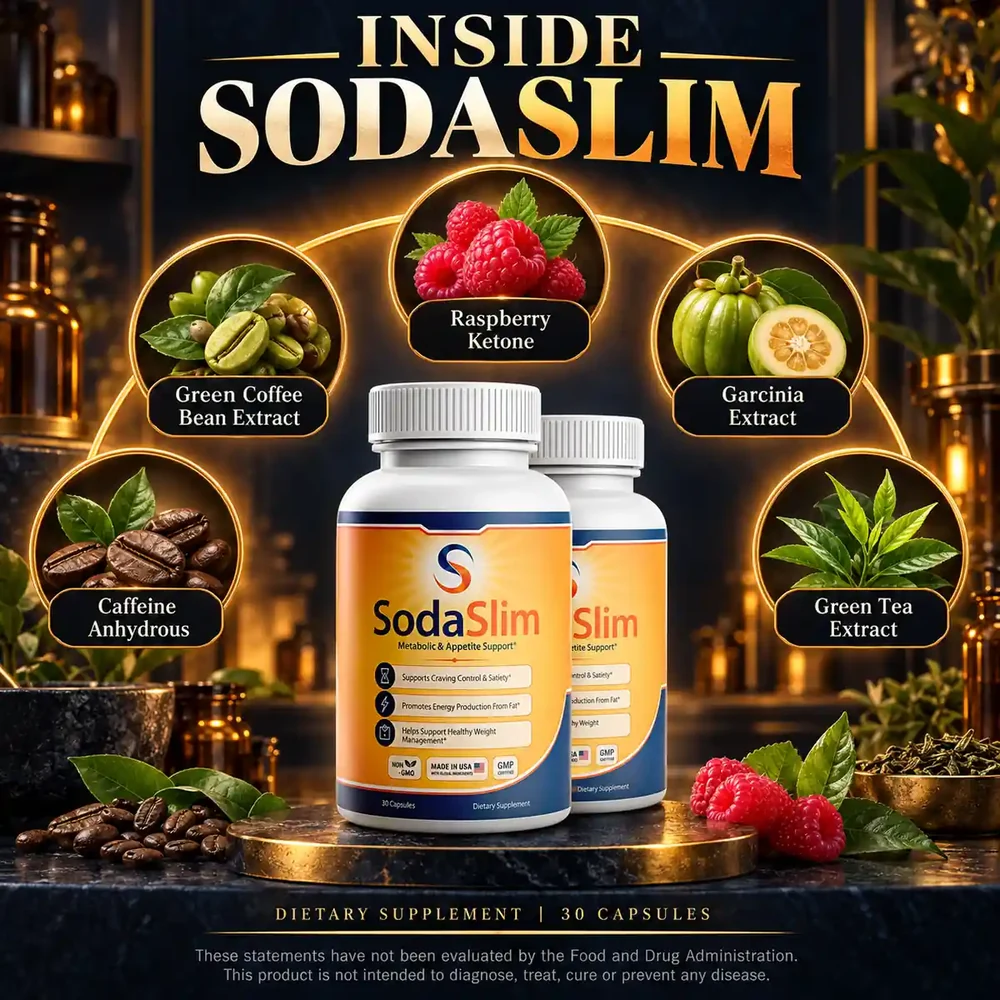
The “Inside SodaSlim” listing card names five ingredients and the Supplement Facts panel declares five. They are the same five. After several products in this series where the card named a fraction of the panel, that deserves saying first.
Five ingredients, five amounts, no proprietary blend — and three of the five carry a printed standardisation, which is better practice than most labels in this series manage. You can work out that this capsule contains about 65 mg of chlorogenic acids, about 65 mg of HCA and about 58.5 mg of EGCG, because the label gives you the arithmetic to do it.
5
5
3 of 5
0
658 mg
138 mg
All five
Every SodaSlim ingredient, in the panel’s printed order
A photograph for each row, and a card that turns to show what the research found.
Scroll sideways — there are five, in the order the panel prints them.
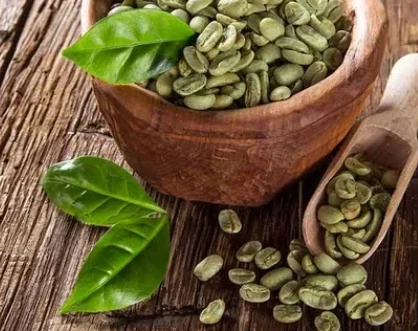
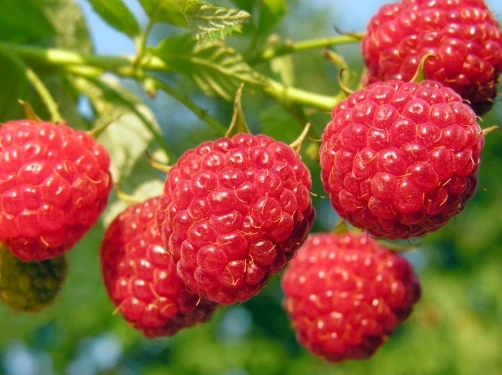
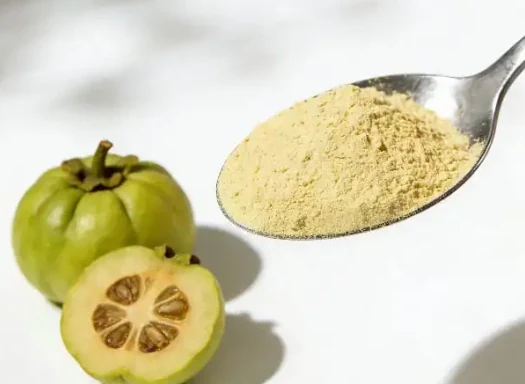
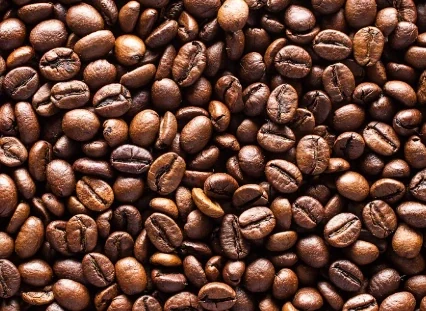
The cards turn. One thing to notice before reading them individually: NIH’s Office of Dietary Supplements publishes a consumer fact sheet on supplements for weight loss, and it covers every one of these five. On most panels in this category half the rows have no federal page at all. Here somebody has looked at all five, which makes the verdicts findings rather than gaps.
Row by row
The five in full, one row at a time
1. Green coffee bean extract — 130 mg
Coffee beans that have not been roasted. Roasting destroys most of the chlorogenic acids, which is the whole argument for using the bean green. What the research found. ODS: green coffee bean extract “might help you lose a small amount of weight”. On safety it is specific: it “seems to be safe (at up to 200 mg a day for 12 weeks)” and “might cause headache and urinary tract infections”.
2. Raspberry ketone — 130 mg
The compound that gives raspberries their smell. Extracting it from fruit is extravagantly expensive, so the ingredient sold at supplement prices is made in a factory. The label does not say which this is. What the research found. ODS is unusually short with it: raspberry ketone’s “effects on body weight are unknown”, and it “hasn’t been studied enough to tell if it’s safe”.
3. Garcinia extract — 130 mg
A small green fruit from South and Southeast Asia. Its rind contains hydroxycitric acid, which is the compound the supplement industry is interested in. What the research found. ODS: garcinia cambogia “has little to no effect on weight loss”. NCCIH is a shade softer and no more encouraging: “It’s unclear whether garcinia cambogia products help with weight loss. Some evidence suggests a modest effect, while other evidence shows no effect.”
4. Caffeine anhydrous — 138 mg
Caffeine dried to a powder. MedlinePlus: it “stimulates your central nervous system, which can make you feel more awake and give you a boost of energy”, peaks in the blood within an hour and lasts four to six hours. What the research found. ODS: caffeine “might help you lose a little weight or gain less weight over time”, and notes that tolerance develops. MedlinePlus puts an 8-ounce cup of coffee at 95–200 mg, so this capsule is a cup of coffee.
5. Green tea extract — 130 mg
Concentrated green tea leaf. The standardisation on this label is the most detailed of the five, and it lets you calculate the EGCG. What the research found. ODS: green tea extract “might help you lose a small amount of weight”. NCCIH: “The catechins and caffeine in green tea and its extracts may have a modest effect on body weight.” But NCCIH’s own consumer tip sheet on weight-loss supplements is flatter: “The science doesn’t support the use of acai berry, bitter orange, or green tea supplements for weight loss.”
Three references
Each amount against the amount the research used
Dashed is the published reference amount. Solid is what one capsule carries.
Where a studied amount exists, this label sits under it. ODS says green coffee bean extract “seems to be safe (at up to 200 mg a day for 12 weeks)” — this capsule has 130 mg, inside that. Caffeine research uses “up to 400–500 milligrams a day” and this has 138 mg. Garcinia is the row where the gap is widest: the trials that exist generally use a gram or more of extract a day, and this capsule carries 130 mg of it. Raspberry ketone has no studied amount to compare against, because the human research ODS could summarise does not exist.
In one SodaSlim capsuleThe published reference amount
Two rows are not drawn, because neither has a published studied amount.
Why only three bars are drawn
A chart like this is honest only if every bar has a real number behind it, and only three of these rows do. ODS names a safe amount for green coffee bean extract and the range caffeine research works in; the garcinia trials that exist report the amount they used. Raspberry ketone and green tea extract have no single published studied amount between them, so drawing a ghost bar for either would mean inventing the one figure the chart exists to show.
The arithmetic
What the standardisations let you calculate
Three rows print enough for a reader to work out the active themselves, which is rare enough to be worth doing out loud. The sum is the same each time: the amount of extract multiplied by the percentage printed beside it.
| Row | Extract | Printed standardisation | What that works out to |
|---|---|---|---|
| Green coffee bean extract | 130 mg | 50% chlorogenic acids | ~65 mg chlorogenic acids |
| Garcinia extract | 130 mg | 50% HCA | ~65 mg HCA |
| Green tea extract | 130 mg | 45% EGCG | ~58.5 mg EGCG |
Each figure is the label’s own percentage applied to the label’s own amount. Nobody had to send us a certificate; the bottle prints the working.
And the pattern in the amount column
Look down the amount column. Four of the five rows are exactly 130 mg. Only the caffeine differs, at 138. Five ingredients chosen on their merits would not land on the same number four times; a pre-made blend divided into equal parts would. It is an observation rather than an accusation, but it is the kind of pattern worth noticing on any panel.
Both things can be true at once. A panel can be a pre-made formula bought in and relabelled and still be the most transparent panel on the shelf, because transparency is about what is printed rather than who blended it. And no certificate of analysis was supplied to this desk, so those three percentages are a printed claim rather than a measured result.
Marketing vs label
The listing card and the panel agree
The seller ships a card headed “Inside SodaSlim” naming five ingredients, and the panel declares the same five. What the card adds beyond the names is presentation: no amounts, no standardisations, no citations. Everything checkable about this formula is on the bottle.
Questions
SodaSlim FAQ: ingredients questions
Is there a proprietary blend?
No. All five rows carry their own amount, and three of the five carry a standardisation as well. In a fat-burner that is unusual and it is the best thing about this product.
Does the standardisation matter?
A great deal. “50% chlorogenic acids” means 130 mg of that extract carries about 65 mg of the compound the research is about. “45% EGCG” means about 58.5 mg of EGCG. Without a standardisation a milligram figure describes weight rather than activity, and most labels in this category do not give you one.
Why are four of the five rows exactly 130 mg?
We do not know, and it is a fair question. Five ingredients chosen on their individual merits would be unlikely to land on the same figure four times; a pre-made blend divided into equal parts would. It is an observation rather than an accusation, but it is the kind of pattern worth noticing on any panel.
What about raspberry ketone?
It is the row with nothing behind it. ODS says its “effects on body weight are unknown” and that it “hasn’t been studied enough to tell if it’s safe”. That is an absence of evidence in both directions, on a fifth of the capsule by weight.
References
Sources for this page
- Office of Dietary Supplements, National Institutes of Health. Dietary Supplements for Weight Loss: Fact Sheet for Consumers. ods.od.nih.gov. Accessed September 24, 2026.
- National Center for Complementary and Integrative Health, NIH. Green Tea. www.nccih.nih.gov. Accessed September 24, 2026.
- National Center for Complementary and Integrative Health, NIH. Garcinia Cambogia. www.nccih.nih.gov. Accessed September 24, 2026.
- MedlinePlus, U.S. National Library of Medicine. Caffeine. medlineplus.gov. Accessed September 24, 2026.
- National Center for Complementary and Integrative Health, NIH. 6 Things To Know About Dietary Supplements Marketed for Weight Loss. www.nccih.nih.gov. Accessed September 24, 2026.
Next
Keep reading
The whole label, panel by panel
The facts table, the caution, the storage line, the disclaimer and the PO box, transcribed and read.
Read it →What the research actually covers
The federal fact sheet covers all five rows. Here is what it found for each of them.
Read it →138 mg, counted
The largest row on the panel, set against the figure FDA cites and the rest of your day.
Read it →See the SodaSlim panel on the official page
Five ingredients, five published amounts, no proprietary blend, and three rows you can calculate. 30 capsules a bottle, one capsule daily, thirty days. 60 days from purchase to change your mind, and the price is shown at checkout.
Price shown at checkout · 60-day window from the date of purchase · ships from inside the US · the label’s own support line is +1 (302) 200-3480